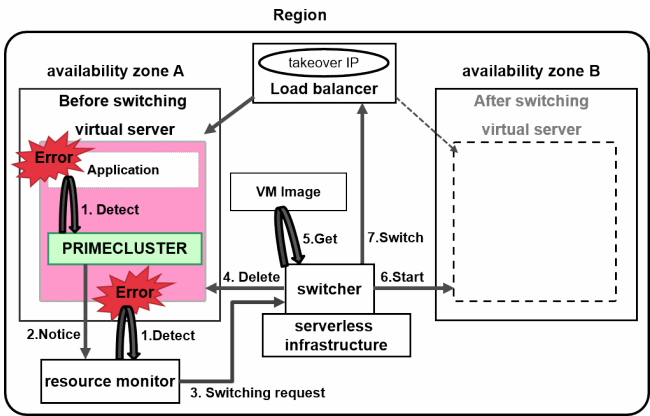
This function detects the following errors and switches the virtual server.
Application error
The PRIMECLUSTER (RMS) detects application error.
Virtual server error
Abnormalities in the cloud infrastructure running virtual servers are detected by the functions provided by the public cloud (for example, CloudWatch).
When the above error occurs, the virtual server is started in a normal availability zone different from the availability zone in which the error occurred. This allows you to build fault-tolerant systems against public cloud infrastructure failures (Example: Power down per server rack, per VM host, etc.).
Note
If the cloud API used by PRIMECLUSTER becomes unavailable due to a public cloud failure, metadata (* 1) of the switching source virtual server may not be inherited by the switching destination virtual server at the time of switching. When this event occurs, immediately reset the metadata of the virtual server in order to restart the application on the virtual server to be switched to. Refer to "Chapter 8 Smart Workload Recovery Messages" in the "FUJITSU Software PRIMECLUSTER Messages" for details on the messages and actions to be taken.
*1 : For AWS, this includes instance metadata such as security groups and tags.
The following describes the behavior when an error occurs in an application.
Abnormalities occurred in application.
RMS detects an application error.
RMS notifies public cloud resource monitor when virtual server stops.
When the resource monitor of the public cloud receives an error, it requests the switcher on the serverless base to switch.
The switcher destroys the virtual server from which it was switched and starts the virtual server in any availability zone different from the one from which it was switched.
The following describes the behavior when an error occurs in the virtual server.
An error occurred in the virtual server.
Abnormality detected by public cloud resource monitor.
Public cloud resource monitor requires switcher on serverless infrastructure.
The switcher destroys the virtual server from which it was switched and starts the virtual server in any availability zone different from the one from which it was switched.
Figure 1.29 Abnormal behavior